Prizefighters 2
- 4.1
- Rating
- 5.00M
- Installs
- Free
- Price

 Analysis by App-foxy
I went into Prizefighters 2 expecting a simple retro boxing game and found something more deliberate: a sports management game where the punches matter, but preparation, timing, and long-term decisions matter just as much. It is free to play, made by Koality Game, and sits in a comfortable space between an arcade boxing title and a career simulator. That mix is the main reason I kept coming back. You can enjoy a quick bout, yet the game also gives you reasons to think about what happens before and after the bell.
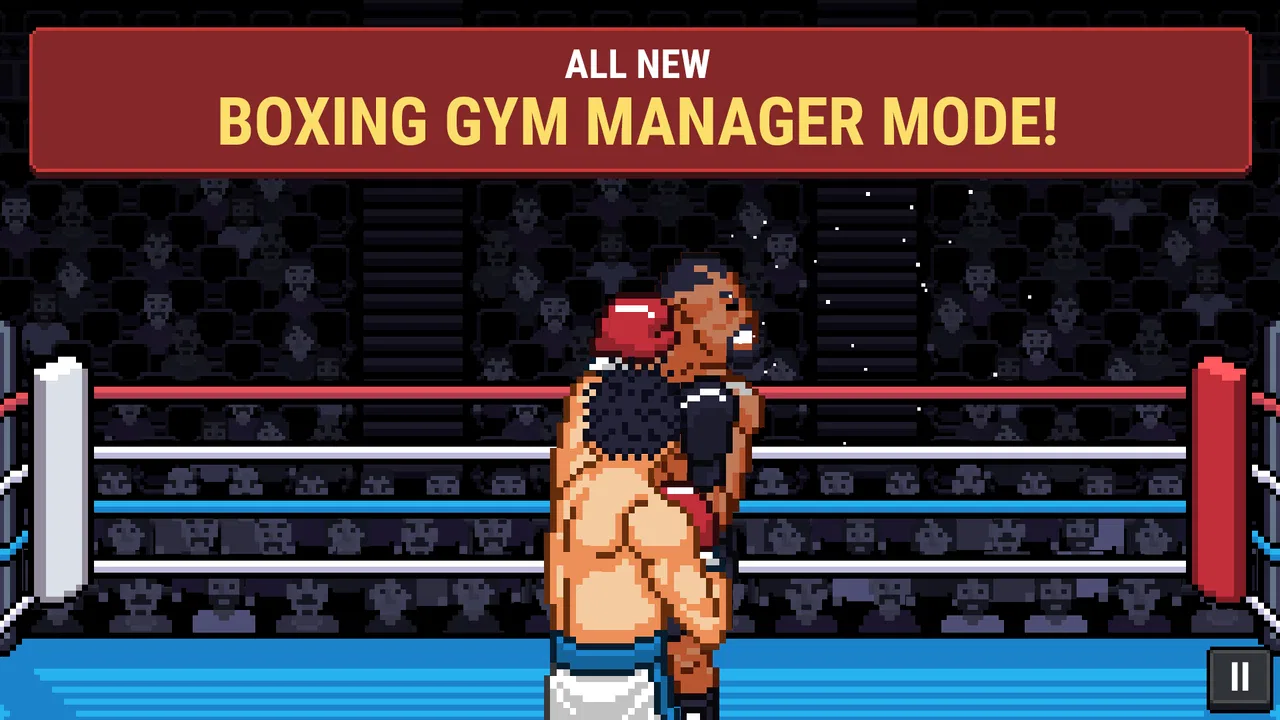
The presentation is intentionally old-school, which suits the idea of a retro boxing champion. It does not try to compete with console-style boxing games through realistic visuals or a huge cinematic production. Instead, it focuses on the rhythm of building a fighter, entering contests, learning from mistakes, and gradually making better choices. For me, that makes it especially appealing on a phone: the game is easy to understand in short sessions, but it has enough structure to reward players who pay attention.
How the career loop feels in everyday play
The basic workflow is straightforward. I look at my fighter’s condition, decide what kind of preparation makes sense, enter a fight when the timing feels right, and then review the result rather than immediately rushing into the next contest. That last step is important. Losing is not automatically a sign that the game is unfair; often it tells me that I entered with the wrong approach, neglected preparation, or treated a difficult opponent like a routine match.
You May Also Like

 Google Keep - Notes and lists
Google Keep’s Quiet Growth Shows the Appeal of Simpler Notes
As mobile work gets busier, Google Keep keeps winning a simple contest: capture a thought quickly, find it later, and get on with the day.

 Blood Strike: 2.5 Anniversary
Blood Strike’s Loadouts Turn Every Drop Into a Tactical Gamble
A close look at Blood Strike’s custom loadouts: how fast access to signature weapons reshapes its battle royale rhythm, rewards preparation, and narrows the gap between fights.

 Pandora - Music & Podcasts
Pandora’s Music Is Easy to Start, but Harder to Recover
Pandora’s strength is its low-effort path from a seed to a station. Its weak spot is how much confidence it asks you to place in connection, setup, and quiet recovery.

 8 Ball Pool
 Is Built on Rivalries, Rematches, and Routine
A close look at the rivalries, rematches, shared routines, and unanswered safety questions that turn a quick pool match into a persistent mobile community.

 Samsung Music
’s Quiet Strength Is Playing What You Already Own
Its reach comes less from spectacle than from dependable access to a personal library. That simplicity is both the app’s strongest retention engine and its ceiling.

 AccuWeather: Weather Radar
AccuWeather Review: A Quick, Clear Forecast for Everyday Decisions
For everyday plans, the best forecast is the one you can understand quickly. AccuWeather makes rain timing, radar, and local conditions easy to act on, with a few trade-offs.
More From Our News Desk



A typical everyday session can be quite short. If I have a few minutes while waiting for a bus, I can check the career situation, make a training decision, and handle a fight without needing to commit to a long play period. When I have more time, I can slow down and think about how my fighter is developing. This flexibility is one of the strongest practical advantages over boxing games that are built almost entirely around rapid action.
The boxing itself is more satisfying when I stop treating every opponent the same way. A reckless approach may work against a weaker fighter, but it becomes expensive when the opponent can punish missed attacks. I found myself using early moments to understand the pace, looking for openings instead of throwing everything immediately. That creates a useful contrast with purely arcade alternatives, where constant attacking is often the safest or most entertaining answer.
The most useful habit is to treat every fight as information, not only as a win-or-lose test. I pay attention to what caused trouble, whether I became too aggressive, and whether my preparation matched the opponent. That mindset makes the career feel less random and gives each result a practical purpose.
The game is also a good fit for players who enjoy progression without needing a complicated rules tutorial. Its boxing theme is familiar, so the basic goal is clear quickly. The deeper appeal comes from making several modest decisions correctly over time. I would recommend it to someone who likes sports games with a career layer, especially if they enjoy watching a created or developing athlete improve rather than controlling a famous real-world star.
On the other hand, I would not choose it for someone who wants a highly realistic boxing simulation with detailed motion capture, advanced broadcast presentation, or a large roster of licensed athletes. Its charm comes from its retro identity and management focus. Players who only want instant, high-speed matches may find the career decisions slower than expected, while players who enjoy planning may find those same decisions are what keep the game interesting.
Settings and choices worth checking before settling in
I recommend spending a little time exploring the available options before beginning a serious career. I do not mean changing everything at once. The better approach is to identify which controls and presentation choices make fights easier to read on your particular phone. Small adjustments to how the game feels can matter more than chasing an ideal setup copied from someone else.
Touch controls deserve attention because boxing depends on responding at the right moment. I prefer a layout that lets me reach the important actions without covering too much of the screen. If a control feels awkward, I would rather adjust my grip and button placement early than blame the game after several poor rounds. This is a simple point, but it becomes increasingly important when fights demand patience instead of frantic tapping.
It is also worth checking how much information is visible during a match and between fights. A player who enjoys making decisions from clear feedback should keep useful indicators easy to read. Someone who prefers a cleaner, more old-fashioned presentation may enjoy reducing distractions where the game allows it. The right choice depends on whether I am trying to learn the system or simply enjoy a relaxed bout.
Because the game is rated Everyone 10+, it is approachable for younger players and families who want a boxing-themed game without an adult-only presentation. That does not mean every child will enjoy it equally. The management side asks for patience, and a player looking for nonstop action may lose interest. I would explain the career structure before handing it to a younger player so they know that improvement comes from repeated decisions rather than one spectacular match.
The free entry point is helpful for testing that fit. There are in-app purchases priced from $0.99 to $4.99 per item, so I would begin by playing normally and deciding whether the core loop works for me before spending anything. The important question is not simply whether optional purchases exist; it is whether I enjoy the decisions, pacing, and boxing enough to continue. If the basic rhythm already feels repetitive, paying will not solve that problem.
I also like to keep my phone’s battery and notifications in mind. This is not a game I need to launch with the expectation of a huge uninterrupted session. A short, focused routine works better: check the fighter, make one or two deliberate choices, play a fight, and stop when attention starts to fade. Boxing rewards concentration, and careless play becomes more common when I am trying to squeeze in too much at once.
Faster patterns that make the career easier to manage
Experienced play is less about moving quickly through menus and more about reducing avoidable decisions. I try to establish a repeatable pre-fight routine. First I check the fighter’s current situation, then I consider whether the next bout is worth taking immediately, and only after that do I commit. This prevents the common mistake of entering a fight simply because it is available.
Another useful pattern is to separate experimentation from serious progression. When I am testing a new approach, I accept that the result may be messy. I do not want to make a major career decision while also learning unfamiliar controls or tactics. By changing one thing at a time, I can tell whether a result came from better preparation, a different fighting style, or simple opponent difficulty.
During a match, I find it faster in the long run to spend the opening exchanges observing. That may sound slower, but it avoids wasting energy on attacks that are unlikely to connect. I watch how the opponent responds when I press, whether I am being punished after missing, and whether the fight rewards a steady pace. Once I understand that pattern, my decisions become quicker because I am no longer guessing.
Between fights, I avoid making every training choice based on the most obvious weakness from the last bout. One bad round can be caused by timing or poor judgment rather than a permanent flaw in the fighter. I look for repeated problems across several contests before changing direction. This is one of the more important trade-offs in the game: reacting too slowly can leave a weakness untouched, but reacting too quickly can produce an unfocused fighter.
For a busy player, I would use a simple session plan. Play one match with full attention, review what happened, make the next career decision, and leave. That routine is more effective than opening the game repeatedly and making rushed choices. It also makes progression feel clearer because each session has a purpose instead of becoming a blur of taps.
For a player with more time, I would keep informal notes about recurring problems. I do not need a spreadsheet. A few words such as “too aggressive early” or “struggled when tired” can reveal patterns that are easy to forget between sessions. This is a non-obvious strength of the game: it rewards personal observation. The system becomes more understandable when I connect decisions to outcomes instead of treating each fight as an isolated event.
The game’s audience size suggests that it has found a substantial mobile player base, with more than five million installs and an average rating of 4.1 from around nineteen thousand ratings. Those figures do not decide whether I will enjoy it, but they do match my impression that this is a well-established choice rather than a tiny experiment. The important point for a new player is that the game has enough appeal to support both casual sessions and more committed career play.
Where deeper play meets real limits
The career structure is enjoyable, but it is not limitless. After I understand the main rhythm, some decisions can begin to feel familiar. The retro design helps the game remain distinctive, yet it also means players seeking modern visual variety or a constantly changing presentation may eventually want something more elaborate.
The same applies to the boxing. It has enough decision-making to make preparation meaningful, but it should not be confused with a full technical simulation. If I want highly detailed footwork, nuanced judging, or the visual drama of a premium console production, another boxing game would be a better choice. Prizefighters 2 is strongest when I value the combination of fights and career management rather than demanding that either side be the most advanced example in its category.
There is also a learning curve created by the game’s willingness to let poor choices matter. That is good for depth, but it can frustrate players who expect immediate power growth. Sometimes the best response to a setback is not a dramatic change but a slower adjustment. Players who dislike repeating a career process after mistakes may find this less forgiving than a straightforward arcade title.
The free-to-play structure deserves a practical mention too. I appreciate being able to try the game without an upfront price, but the presence of optional purchases means I would keep a clear boundary around spending. The individual items range from $0.99 to $4.99, which is manageable when treated carefully, yet small purchases can add up if I use them impulsively. My advice is to decide what kind of player I am before buying: if I enjoy gradual progression, there is no reason to rush it; if I dislike waiting or repeating work, I should consider whether the purchase model will change my experience.
Device compatibility is reasonably broad, since the game supports Android 6.0 and later. That makes it accessible to people using older phones, although the experience will still depend on the device’s screen, responsiveness, and general condition. On a smaller display, I would pay extra attention to control comfort. A game can be well designed and still feel less pleasant if my fingers cover the action or the interface feels cramped.
The current version is 1.09.3, so I would install the available version from the official app store and keep expectations grounded in the game’s established retro style. I would not choose it because I expect a completely different experience after every update. I would choose it because the existing combination of boxing, progression, and management already suits the way I like to play.
Who should choose it over a simpler boxing game?
I think it is a strong choice for someone who wants boxing to feel like a career rather than a series of disconnected matches. It works particularly well for players who enjoy making a plan, seeing consequences, and returning later to improve. The game can also suit people who like sports management but do not want a spreadsheet-heavy simulator with a steep barrier to entry.
A casual player can enjoy it by focusing on individual bouts, while a more committed player can build a repeatable process around preparation and review. That range is valuable. I can play it lightly when I am tired, then become more analytical when I have the attention for it. The retro presentation makes the game feel approachable instead of intimidating.
I would steer a different player toward a pure arcade boxing game if their priority is immediate action, flashy presentation, and minimal planning. I would also suggest looking elsewhere to someone who wants real athletes, licensed competitions, or a realistic broadcast atmosphere. Prizefighters 2 is not trying to be those things, and forcing it into that comparison misses why its structure works.
It is also not ideal for anyone who becomes annoyed by gradual development or by needing to learn from failed attempts. The game asks me to accept that a fighter’s progress is a process. If I want every match to feel equally accessible and every loss to be quickly forgotten, the career format may feel like unnecessary friction.
My verdict after settling into its rhythm
My overall impression is that Prizefighters 2 succeeds because it gives mobile boxing a clear identity. It is not merely a button-based punching game, and it is not an intimidating simulation. It sits between the two, using a retro style to support a career loop built around preparation, observation, and gradual improvement.
Koality Game has made something that rewards attention without demanding that every session become a major commitment. I can play a match during a short break, but the game becomes more satisfying when I return to a repeatable routine and think about why a result happened. The most effective players will not necessarily be the ones who tap fastest; they will be the ones who recognize patterns and avoid turning every problem into an emergency.
Its limitations are clear. The presentation is deliberately modest, the deeper systems may eventually feel familiar, and players looking for an expansive modern boxing simulation should choose a more technically ambitious alternative. The optional purchases also mean I would play with a spending plan rather than buying automatically. None of those issues cancels out the central appeal, but they do define the audience accurately.
For me, the best reason to install it is the balance between accessibility and consequence. I can understand the premise quickly, yet I still have room to improve how I prepare, how I fight, and how I respond to setbacks. Since it is free and rated Everyone 10+, it is easy to try without making a large commitment. If you enjoy sports games where the story comes from your decisions rather than from presentation alone, I think this is worth your time.
My recommendation is simple: choose it when you want a retro boxing career with meaningful habits, not just a quick arcade match. Give the first sessions enough patience to learn the rhythm, review your mistakes, and avoid rushing purchases. Once that routine clicks, the game offers a surprisingly personal sense of progress, which is exactly what keeps me returning to the ring.
FAQs for Prizefighters 2
01What features does Prizefighters 2 offer compared to the original game?
Prizefighters 2 builds upon its predecessor with enhanced graphics, a deeper career mode, and more customization options for fighters. It also introduces new gameplay mechanics such as improved AI and more realistic physics, providing a more immersive boxing experience. Multiplayer modes have been expanded, allowing for online battles against friends or global opponents.
02Is Prizefighters 2 free to play, and are there in-app purchases?
Prizefighters 2 is free to download and play, but it offers in-app purchases to enhance the gaming experience. These purchases can include cosmetic items, boosts, or additional content. While the game is enjoyable without spending money, these purchases can accelerate progression or provide unique customization options.
03What are the system requirements to run Prizefighters 2 on Android and iOS?
To run Prizefighters 2 smoothly, you’ll need a device with at least Android 5.0 or iOS 10.0. While it can run on lower-end devices, a device with more RAM and a faster processor will ensure better performance, especially during intense matches or when using advanced graphics settings.
04Can I play Prizefighters 2 offline, or is an internet connection required?
Prizefighters 2 can be enjoyed both offline and online. The career mode and single-player matches are accessible without an internet connection. However, to access features like multiplayer battles, leaderboards, and cloud saving, an internet connection is necessary. Offline play is perfect for when you’re on the go.
05How does the multiplayer mode work in Prizefighters 2?
Multiplayer in Prizefighters 2 offers both local and online options. You can challenge friends in local matches or compete with players worldwide through online matchmaking. The game features ranked battles where players can climb the leaderboard, showcasing their skills. Regular updates and events keep the multiplayer experience fresh and engaging.
Pros
- Smooth and responsive controls enhance gameplay.
- Diverse roster of customizable fighters.
- Engaging career mode with progression system.
- Retro graphics appeal to nostalgic gamers.
- Frequent updates and active developer support.
Cons
- Limited multiplayer options available.
- Occasional in-app purchase prompts.
- Repetitive background music can be tiring.
- Learning curve for new players.
- Some animations feel a bit outdated.

Prizefighters 2
Gallery